
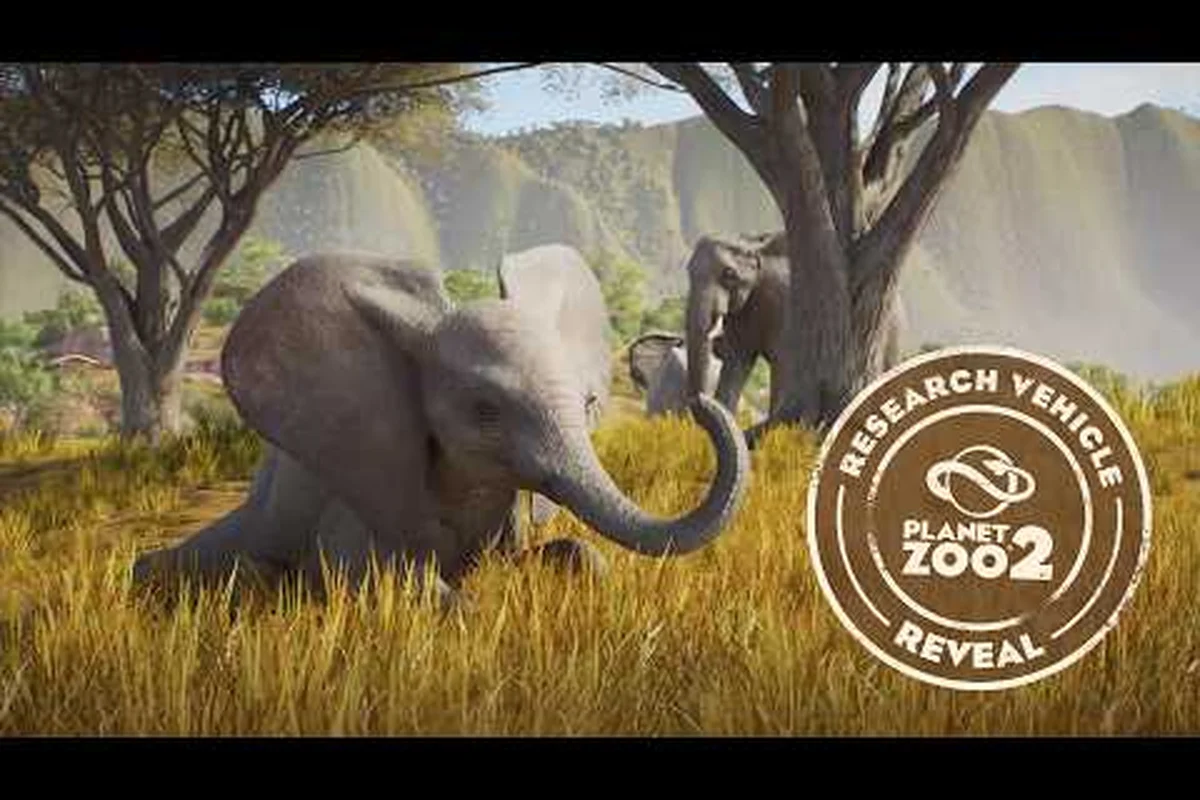
Planet Zoo 2 conservation research is the backbone of the new Wildlife Reserve experience, tying together IUCN status tracking, gene pool management, and species recovery goals. Understanding these research loops early is what separates a struggling breeding program from a thriving, self-sustaining reserve that contributes to in-game conservation credits. This guide breaks down every research mechanic, from population viability thresholds to long-term reintroduction planning.
Understanding the Conservation Research Loop
Conservation research in Planet Zoo 2 is a structured, multi-phase process that rewards long-term planning. According to the official Planet Zoo 2 feature overview, players begin their journey as a Conservation Coordinator at the fictional Foundation for Endangered Nature (FEN), where every wildlife project flows through research, breeding, and release. The research loop is designed so that the data you collect inside a Wildlife Reserve directly influences your ability to release healthier, more genetically diverse animals later.
Research Phases and Funding
Every conservation project starts with a Research Proposal in your reserve. Once submitted, FEN allocates a baseline Research Grant based on the species' IUCN status. Critically Endangered species receive the highest funding tier because their population models demand more intensive data collection. The research loop consists of three core phases:
-
Baseline Assessment — counting current individuals, recording genetic markers, and mapping the enclosure against natural range data
-
Population Monitoring — tracking births, deaths, and genetic diversity across multiple in-game years
-
Recovery Evaluation — comparing your managed population against release-readiness thresholds before you can move animals to a release habitat
| Research Phase | Primary Activity | Funding Tier by IUCN Status | Estimated Duration |
|---|---|---|---|
| Baseline Assessment | Census, genetic sampling, habitat mapping | LC/VU: Low; EN: Medium; CR: High | 1–2 in-game months |
| Population Monitoring | Birth/death logs, gene pool tracking | Scales with population size | Continuous |
| Recovery Evaluation | Viability scoring, release approval | CR only — High | 2–3 in-game months |
Why Data Quality Matters
A research project that records poor data quality will produce unreliable viability scores, which means FEN is less likely to greenlight a release. The official player guide on Planet Zoo 2's animal care documentation emphasizes that every species in your zoos and Wildlife Reserves has measurable needs and behaviours that must be actively managed. When you skip regular welfare checks, your conservation data quality drops, and your project funding is at risk of being downgraded mid-season.
Reading IUCN Status in Planet Zoo 2
Planet Zoo 2 maps every species to a real-world IUCN Red List category, and the in-game Zoopedia displays the current rating next to each animal. The categories follow the standard international framework used by field biologists, and they directly determine how urgently the species needs your intervention.
The Six IUCN Tiers in Game
| IUCN Category | In-Game Label | Conservation Need | Research Priority |
|---|---|---|---|
| LC Least Concern | Stable | Low | Optional |
| NT Near Threatened | Declining | Low-Medium | Recommended |
| VU Vulnerable | At Risk | Medium | High |
| EN Endangered | Urgent | High | Very High |
| CR Critically Endangered | Critical | Very High | Maximum |
| EW Extinct in the Wild | Reintroduction Only | Maximum | Mandatory for release |
Players report that the Zoopedia entry updates dynamically as global conservation data shifts, so a species that launches as Vulnerable can move to Endangered in future content updates. The official Planet Zoo 2 news announcement confirms the game ships with over 130 species, including flying birds and fully aquatic animals for the first time, which means the research surface area is much larger than the original Planet Zoo.
Threatened Species Behavior
Animals flagged as Threatened (VU, EN, or CR) show subtle in-game changes: reduced fertility rates when gene pools are narrow, higher stress reactions to poor habitat design, and a visible warning icon in the Zoopedia when their wild population model is collapsing. If you want to dig deeper into the genetic side of these warnings, the Planet Zoo 2 animal genetics guide covers how inbreeding coefficients and trait inheritance interact with these threatened status penalties.
Reserve Genetics and Population Management
Planet Zoo 2 reserve genetics is the engine that turns raw breeding data into actionable conservation outcomes. Every individual animal carries a hidden genetic profile that determines long-term fitness, fertility, and resistance to disease. If you manage a reserve with too few founders or fail to rotate breeding pairs, your population will hit an inbreeding crisis within a few generations.
The Five Genetic Markers You Must Track
The in-game Zoopedia surfaces five measurable markers — Founder Diversity, Inbreeding Coefficient, Lethal Allele Load, Adaptive Trait Spread, and Effective Population Size (Ne) — that directly drive your Conservation Research population viability score on a reserve. Community testing documented on the Planet Zoo subreddit confirms these are the most reliable indicators of whether a release request will be approved by FEN (Frontiers for Endangered Nature), since FEN cross-checks each of the five values against the IUCN Red List status tier of the species you intend to release before stamping a permit.
| Genetic Marker | What It Measures | Healthy Range | Crisis Threshold |
|---|---|---|---|
| Founder Diversity | Number of unique lineages | 8+ founders | Below 4 founders |
| Inbreeding Coefficient | Average relatedness | < 0.10 | > 0.25 |
| Lethal Allele Load | Hidden recessive defects | < 5% | > 15% |
| Adaptive Trait Spread | Climate/feed adaptability | 60%+ population | Below 30% |
| Effective Population Size (Ne) | Breeding-capable adults | 50+ individuals | Below 20 individuals |
Animal Population Management Strategy
Effective animal population management in Planet Zoo 2 is a balancing act between growth, genetic diversity, and reserve capacity. When a population exceeds the carrying capacity of your reserve, stress levels rise and fertility drops. The solution is not to cull randomly, but to use the Genetic Exchange mechanic to transfer individuals between linked reserves and prevent localized bottlenecks.
A practical workflow for sustainable population management looks like this: start by mapping each species' IUCN status against your reserve's available footprint, then calculate the Ne (effective population size) threshold of 50 needed to retain 95% of heterozygosity across ten in-game generations. Every breeding decision should be logged in the Research Report panel so lethal-allele frequency and inbreeding coefficient (F) trends remain visible, and any transfer between linked Wildlife Reserve outposts must be validated against habitat compatibility before the animal leaves its source enclosure.
-
Quarterly census — count every individual, log birth/death events, and export the data to your research log
-
Founder rotation — swap at least one breeding adult between linked reserves every in-game year to keep the gene pool fresh
-
Adaptive trait culling — remove only individuals carrying high lethal-allele loads rather than healthy surplus animals
-
Stress audit — inspect enrichment items, herd size compatibility, and shelter coverage; stress is the leading silent killer of small populations
-
Release queueing — once Ne exceeds 50 and inbreeding stays below 0.10, queue the strongest family line for the recovery evaluation phase
Official Planet Zoo 2 feature notes state that players can nurture, release, and conserve animals across the new Wildlife Reserve game mode, which means your population data is not just an internal log — it directly unlocks the narrative outcome of every conservation project you complete.
Threatened Species Recovery Projects
A threatened species recovery project is the most ambitious form of Planet Zoo 2 conservation research, requiring multiple linked reserves, sustained funding, and a release habitat that mirrors the species' natural range. The Career mode storyline places you at the center of these projects, but Franchise and Sandbox mode both allow you to design your own recovery pipelines.
Project Structure and Milestones
| Milestone | Deliverable | Funding Reward | Failure Consequence |
|---|---|---|---|
| Project Initiation | Approved research proposal | Base grant | Project cancelled |
| Mid-Project Review | Population report + genetic log | Bonus credits | Funding reduced |
| Release Readiness | Viability score above 75 | Large payout | Release denied |
| Post-Release Monitoring | 12-month survival data | Conservation credits | Species returns to reserve |
Coordinating Multiple Reserves
For Critically Endangered species, a single reserve is rarely enough. The most successful recovery projects, according to community reports on the Planet Zoo 2 Discord, link three to five reserves across different climate biomes so that adaptive trait spread stays high even if one population suffers a local die-off. If you are planning a coordinated release pipeline, the Planet Zoo 2 reserve management guide walks through the day-to-day logistics of running linked reserves in parallel.
Rewilding and Release
The final step of any threatened species project is releasing your population back into a managed wild habitat. FEN requires that the release habitat matches the species' climate and terrain needs almost exactly, which is why many players build a dedicated release enclosure first and then transport animals in. For a step-by-step breakdown of breeding specifically for release, the Planet Zoo 2 rewild animals guide explains the trait selection process and the education board integration that boosts post-release survival rates.
Data Tables: Project Tiers and Research Outcomes
The table below maps each Conservation Coordinator project tier to its underlying research deliverables, letting you match IUCN Red List targets against reserve count, in-game time investment, and the credit payout you can expect. Because every tier feeds data into the conservation research loop, planning your queue around the Baseline → Recovery → Reintroduction → Flagship progression keeps the reserve genetics pipeline moving and unlocks higher-value grants faster than running isolated one-off studies.
| Project Tier | IUCN Categories Covered | Reserves Required | Average Duration | Conservation Credits |
|---|---|---|---|---|
| Tier 1: Baseline | LC, NT | 1 | 1 in-game year | Low |
| Tier 2: Recovery | VU, EN | 2–3 | 2–3 in-game years | Medium |
| Tier 3: Reintroduction | CR, EW | 3–5 | 4+ in-game years | High |
| Tier 4: Flagship | Multi-species CR | 5+ linked reserves | 5+ in-game years | Maximum |
A flagship project combines multiple Critically Endangered species into a single biodiversity corridor, and the field data from one species often accelerates the approval of the next. This is where the conservation research loop pays off the most, because every previous project has already trained your reserve staff and pre-warmed your grant pipeline. The official Planet Zoo 2 Steam page confirms that the game ships with three full game modes — Career, Franchise, and Planet Hub — so players who prefer sandbox experimentation can still simulate every tier without a storyline gate.
Frequently Asked Questions
What is Planet Zoo 2 conservation research, in plain terms?
It is the structured process of collecting population, genetic, and habitat data inside a Wildlife Reserve to support a real-world species recovery goal. You begin as a Conservation Coordinator at FEN, run a research proposal, and use the resulting data to unlock animal releases. The loop rewards long-term planning over short-term zoo building.
How does reserve genetics affect an animal's fitness?
Inherited alleles determine fertility, disease resistance, and adaptability to climate. When two related individuals breed, the offspring's inbreeding coefficient rises, which can trigger fertility loss and expose recessive defects. Keeping the founder count above eight and the inbreeding coefficient below 0.10 keeps a population genetically healthy.
Which IUCN status gives the highest research funding?
Critically Endangered species attract the largest grants because their population models require the most data. Extinct in the Wild species are treated as reintroduction-only and bypass the standard research phase entirely, but they still require a verified release habitat before any individual is approved for release.
Can I run a threatened species project in Sandbox mode?
Yes. Sandbox mode removes the FEN storyline gate but keeps every research mechanic intact, including genetic tracking, viability scoring, and the release approval step. Franchise mode adds economic pressure by tying funding to conservation credits, which makes it the most realistic setting for testing recovery strategies.
How many reserves do I need for a successful reintroduction?
Community data suggests three to five linked reserves is the practical minimum for a Critically Endangered reintroduction, because adaptive trait spread collapses quickly in smaller populations. Each reserve should target an effective population size of 50+ breeding adults to maintain genetic diversity across the full project.