
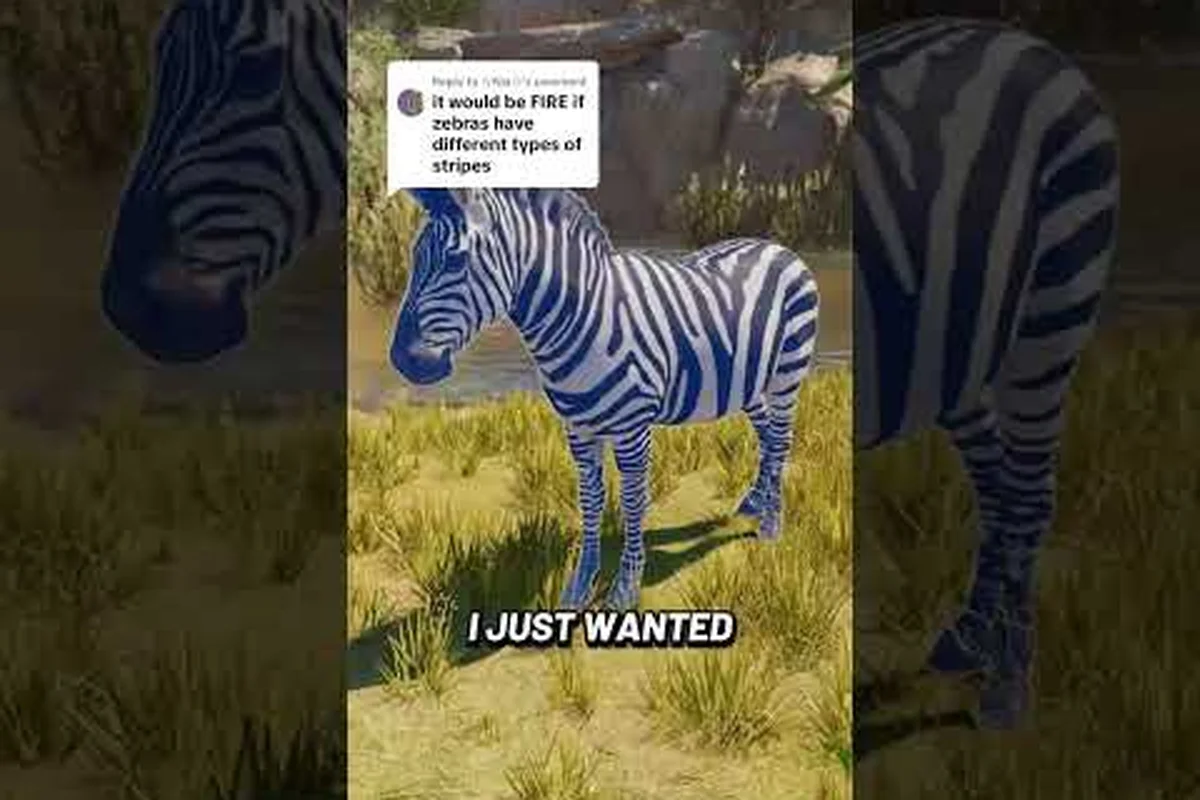
Breeding the perfect bloodline sits at the heart of Planet Zoo 2 animal genetics, where each parent passes measurable traits to their offspring and where thoughtful pairing shapes a zoo's long-term success. According to the official Planet Zoo 2 Zoopedia, the sequel launched on 13 October 2026 with over 130 species, including fully aquatic and flying animals for the first time, which makes the genetic system more relevant than ever for new and returning zookeepers. Players who ignore breeding end up with sterile populations, wasted exhibit space, and vulnerable conservation bloodlines; players who master it unlock rare color morphs, longer lifespans, and strong genetics that survive multiple generations.
Why Animal Genetics Matter in Planet Zoo 2
Animal genetics in Planet Zoo 2 is the layer that sits beneath every habitat and exhibit you build, because each species has a numerical genome that determines fertility, longevity, immunity, and the chance of passing rare cosmetic variants to offspring. The system runs on real inheritance math: each parent contributes roughly half of the offspring's trait values, and small statistical bonuses can compound into a bloodline that consistently outperforms random-bred stock over several generations. That compounding effect is exactly why two zoos using the same species roster can look wildly different in welfare scores after a decade of in-game time.
The Three Trait Pillars
Every breedable species in Planet Zoo 2 tracks three genetic pillars that interact with one another and with habitat quality. The pillars are Fertility, Longevity, and Immunity, and each one carries an integer value from roughly 0 to 100 depending on the lineage. Fertility dictates how often a pair will produce a viable birth and how many cubs or hatchlings each clutch contains, which is the engine that keeps your animal storage facilities rotating. Longevity extends the natural lifespan of the offspring so the same genetic investment continues producing for years rather than months. Immunity is the trait that buffers against disease outbreaks, which become a real threat once your zoo crosses a certain population density and your habitat animals share water sources or browse lines.
| Trait Pillar | What It Controls | Ideal Range for Breeding Pairs | Visible Effect in Zoo |
|---|---|---|---|
| Fertility | Birth rate, clutch size | 70–90 | More frequent births, larger litters |
| Longevity | Adult lifespan in months | 60–85 | Older breeding animals still productive |
| Immunity | Disease resistance | 50–80 | Fewer vet callouts during outbreaks |
When two high-value parents mate, the calf inherits the average of the two parent values plus a small random modifier, which is why pairing two 80-Fertility adults usually produces a 75–85 Fertility calf rather than a coin-flip outcome. Players can preview expected trait ranges in the Zoopedia breeding panel before committing, and the panel also flags inbreeding penalties when a proposed pair shares a recent ancestor.
Why Genetics Connect to Conservation
Conservation in Planet Zoo 2 is no longer a side mode; it is woven into the same genome that powers your standard zoo gameplay. When you release an animal into a Wildlife Reserve, the offspring it produces there carry forward the genetics of the zoo-bred parent, which means a strong bloodline in your zoo becomes a resilient wild population. A weak or inbred bloodline, by contrast, produces endangered species populations that struggle to bounce back even in protected reserves. The conservation category gets its own breeding pressure, because once you unlock the research tier, you can selectively release the best individuals to seed a thriving wild population, and reserves can later supply new founders for your exhibits through animal trading with the global market. This two-way flow is one of the most satisfying loops in the sequel.
Core Genetics Mechanics Every Breeder Should Know
Beneath the polished Zoopedia interface, Planet Zoo 2 animal genetics runs on a handful of rules that experienced players use to plan their bloodlines months of in-game time in advance. Learning these rules removes most of the guesswork from breeding and turns your zoo into a self-sustaining population engine.
How Trait Inheritance Works
Each parent contributes its own trait values, and the offspring receives the mean of the two parents plus a variance roll of roughly plus or minus five points. The roll is independent for each pillar, which is why a Fertility-focused pairing sometimes produces a calf with surprisingly high Immunity. Variance is also where rare color morphs come from: a hidden cosmetic gene is stored on every individual and only expresses when both parents carry the variant, which is how the albino and melanistic morphs surface in long-running bloodlines. There is a small inbreeding penalty applied when a proposed pair shares a grandparent or closer relative, and the penalty reduces each pillar by up to 15 percent depending on how close the relationship is. Skilled breeders avoid this by rotating founding stock through animal trading with other players and by using a dedicated animal storage facility as a buffer against accidental sibling matings.
Generation Tracking and Lineage History
The Zoopedia records a four-generation pedigree for every individual in your zoo, and that pedigree becomes the single most important tool for managing bloodlines. Players can click any animal and trace its grandparents, great-grandparents, and great-great-grandparents, including each ancestor's trait values and conservation status. When you spot the same high-value ancestor appearing in too many current adults, the game flags a lineage bottleneck, which is the right moment to bring in fresh genetics from a trade partner or to release one of the over-represented adults into a reserve. The Zoopedia also calculates a genetic diversity index between 0 and 100 for each species in your zoo, and dropping below 40 triggers welfare penalties that you can only fix by introducing new founders. Keeping the index above 60 is a sensible target for any zoo that wants stable, long-term populations.
Fertility, Pregnancy, and Birth Mechanics
Pregnancy in Planet Zoo 2 is triggered automatically when a compatible male and female share an enriched habitat with adequate space, food, and water. The chance per in-game day is governed by the average Fertility of the pair, and a 70-Fertility pair will reliably produce a calf every 30 to 45 in-game days, while an 85-Fertility pair can shorten that to 20 to 30 days. Pregnancy length scales with species and ranges from a few days for small rodents to more than 600 in-game days for elephants and rhinoceroses. The new aquatic and flying animals introduced in Planet Zoo 2 follow their own pregnancy timers, with most fish species releasing eggs within a single in-game day and large birds incubating for 30 to 90 days depending on body size.
| Lifecycle Stage | Average Duration | Player Action Required |
|---|---|---|
| Courtship to conception | 1–3 in-game days | Monitor compatibility, provide enrichment |
| Pregnancy/incubation | 5–600 in-game days (species-dependent) | Maintain female welfare, separate from stressors |
| Juvenile to sub-adult | 60–180 in-game days | House separately or in nursery habitat |
| Adult and breedable | 12–40 in-game years (real-time scale) | Choose mate, log pedigree |
Building Strong Bloodlines: Breeding Strategies That Work
A breeding program in Planet Zoo 2 is only as strong as the foundation you lay in the first few generations, and a few disciplined habits can save hundreds of in-game hours of corrective breeding later. The strategies below are how experienced zookeepers turn a starter population into a self-improving line.
Start With the Best Founders You Can Afford
The single biggest mistake new players make is adopting the first cheap animals they see on the trade market and breeding from them, which locks in mediocre trait values that take five or more generations to wash out. The correct move is to spend your early conservation credits on three to four high-Fertility, high-Immunity founders per species, ideally from multiple sources so the lineage starts with broad genetic diversity. Once you have those founders, run a focused breeding plan: pair the two highest-value adults first, retire their offspring into your main population, and rotate new founders in every fourth generation to keep diversity above 60. The early investment pays off because the third-generation offspring will already outperform random-bred stock from any trade market.
Use Storage Facilities as a Genetic Library
The animal storage facility introduced in Planet Zoo 2 is more than a holding pen; it is a genetic library where you can preserve high-value individuals for years of in-game time without aging them out. The smartest zookeepers use storage to keep their top 10 percent of each bloodline in reserve, which lets them pull a fresh breeding male back into the population whenever the genetic diversity index starts to slip. Storage fees are real, and they scale with the rarity of the animal, but the cost is almost always lower than buying a replacement founder on the trade market. Players who treat storage as a permanent archive rather than a temporary overflow report far fewer inbreeding penalties and far more successful long-term bloodlines.
Plan for Exhibit Animals and Habitat Animals Separately
The game distinguishes between exhibit animals and habitat animals because their breeding needs and display value are very different, and treating them with one strategy usually underperforms. Exhibit animals are typically smaller species that live in walk-through or glass-enclosed spaces, and they are valued for their visibility to guests, their educational potential, and their cosmetic variants. Habitat animals are larger species that need dedicated outdoor spaces, and they are valued for their breeding output, their contribution to conservation programs, and their draw on guest admission prices. A solid plan builds a small, high-quality exhibit population that showcases rare morphs and a larger habitat population that drives the genetic engine.
| Population Type | Typical Size | Trait Priority | Main Income Source |
|---|---|---|---|
| Exhibit animals | 4–12 individuals | Cosmetic rarity, low aggression | Guest donations, education credits |
| Habitat animals | 20–80 individuals | Fertility, Immunity, Longevity | Conservation grants, trade fees |
| Reserve population | 30–200 individuals | Genetic diversity, wild-readiness | Long-term conservation score |
Trading, Storage, and the Global Market
Animal trading in Planet Zoo 2 is a two-sided system: it is how you acquire new founders, how you dispose of excess stock, and how you interact with the broader community of zookeepers that play the game. Done well, trading is a steady source of income and a long-term hedge against genetic bottlenecks; done poorly, it drains your conservation credits and floods the market with low-value adults.
How the Trade Market Works
The trade market is accessible from the main zoo management screen, and it lists every animal you have set to "available for trade," along with the asking price and a snapshot of the animal's trait values. Other players and the simulated NPC market can purchase your animals, and the price scales with the rarity of the species, the strength of the traits, and any cosmetic variants the individual carries. A high-Fertility, albino morph of a popular exhibit species can easily fetch ten times the base value of a standard individual, which is why strong bloodlines translate directly into trade revenue. The market refreshes daily, and prices fluctuate based on supply, so timing your listings matters as much as the animal's quality.
| Animal Tier | Trait Range (Average) | Approx. Trade Multiplier | Best Use |
|---|---|---|---|
| Standard | 30–50 | 1× | Bulk trade, reserve seeding |
| Quality | 50–70 | 2–3× | Habitat foundation stock |
| Superior | 70–85 | 4–6× | New zoo founders |
| Elite | 85+ | 8–12× | Showpiece or morph carrier |
Smart Storage Practices
Long-term animal storage is the lever that turns an average zoo into a championship bloodline operation, and it is also the easiest system to misuse. A common rookie error is to store low-value adults to "save" them, which drains conservation credits without contributing to the genetic future. A better practice is to store only the top-tier individuals from each species, especially carriers of rare cosmetic genes, and to retire the rest through trade or release. The facility's storage slots are limited, and the slots you do not waste on filler animals become slots you can use to back up your best bloodlines against disease outbreaks, habitat failures, or accidental inbreeding. Players who run their storage as a curated genetic archive report far higher average trait values across their zoo after about 20 generations.
Conservation Genetics and Endangered Species Programs
Planet Zoo 2 animal genetics is tightly bound to the conservation research track, and the strongest end-game content rewards players who treat their bloodlines as a real contribution to species survival. Endangered species programs are where careful breeding pays off the most, because the populations are small, the genetic diversity is fragile, and every founder matters. s players who treat their bloodlines as a real contribution to species survival. Endangered species programs are where careful breeding pays off the most, because the populations are small, the genetic diversity is fragile, and every founder matters, and longer-lived individuals stretch that contribution across more breeding seasons, which is why the per-species breakdowns in our Planet Zoo 2 animal lifespan guide are worth weighing alongside any pair's compatibility score before you finalize a match.
Working With Threatened Lineages
When you start an endangered species program, the Zoopedia will show a starting genetic diversity index that often sits below 40, and the trait averages will be lower than what you would see in well-established common species. The first step is to acquire as many unrelated founders as your conservation credits allow, ideally from players whose bloodlines you have researched through the trade market. The second step is to run a parallel breeding plan: one sub-line that maximizes Fertility to grow the population quickly, and a second sub-line that prioritizes Immunity and Longevity to keep the population stable once it reaches carrying capacity. After about 10 generations of disciplined breeding, the diversity index usually climbs above 60 and the population becomes self-sustaining, at which point you can begin releasing animals into Wildlife Reserves without welfare penalties.
Releasing Into Reserves Without Breaking the Bloodline
Releasing a strong zoo-bred animal into a reserve is the endgame goal of any conservation program, but the release needs to be selective or you will collapse the genetic diversity you worked to build. The community-tested approach is to release only adults with above-average trait values and a clean four-generation pedigree, and to keep one or two elite individuals of the same species in animal storage as insurance. The reserve population that emerges from these releases can later serve as a source of new founders for your main zoo, because reserve animals develop wild-type adaptations that occasionally surface as positive modifiers in their offspring. This is how experienced players turn a single zoo bloodline into a regional network of conservation genetics, and it is the closest the game gets to a real-world species recovery program.
Frequently Asked Questions
What is the fastest way to raise the genetic diversity index in Planet Zoo 2?
Acquire at least three unrelated founders from the trade market and rotate them through your breeding pairs every fourth generation. Most zoos see the index climb above 60 within 10 generations if new founders are introduced regularly.
How do rare color morphs like albino and melanistic appear?
Both parents must carry the hidden variant gene for the offspring to express the morph. The trait shows up most often in long-running bloodlines where high-value individuals have been paired across several generations, which is why elite morphs usually come from dedicated breeders rather than random trade lots.
Is animal storage worth the ongoing credit cost?
Yes, for any species you intend to keep breeding. The facility preserves high-value individuals indefinitely and lets you retire them back into the population whenever the diversity index drops, which saves the long-term cost of buying replacement founders from the trade market.
Can exhibit animals and habitat animals share genetics?
They can if they are the same species, and the Zoopedia treats them as one continuous population for diversity purposes. Most experienced zookeepers keep the two sub-populations physically separate to avoid unwanted matings but share the same four-generation pedigree for tracking.
How do conservation releases affect my main zoo genetics?
Reserves maintain a separate population but can supply new founders to your zoo through periodic research unlocks. The strongest long-term plan pairs careful zoo-side breeding with periodic reserve releases, which is the same loop the developers described on the official Planet Zoo 2 news page.
Mastering Planet Zoo 2 animal genetics takes a few seasons of deliberate breeding, but the payoff is a self-improving population that funds your zoo through trade, powers your conservation score, and showcases rare morphs that no random-bred zoo can match. The habits that separate strong breeders from the rest are simple to learn: start with elite founders, treat storage as a genetic library, plan exhibit and habitat populations separately, and connect every breeding decision to a clear conservation outcome. Players who follow those habits build bloodlines that hold up across decades of in-game time and that turn the sequel's expanded roster of 130-plus species into a real long-term project.