
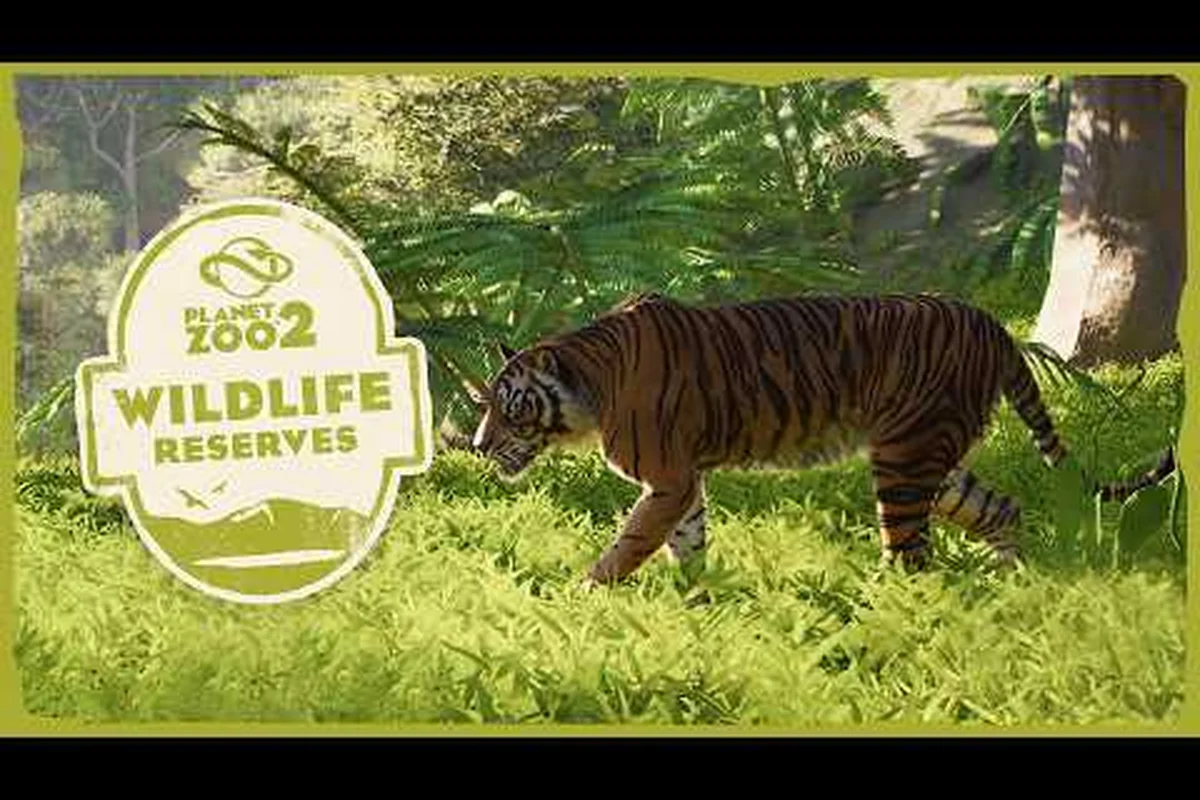
Conservation projects in Planet Zoo 2 move far beyond placing donation bins and breeding pandas. The new Wildlife Reserves system turns your zoo into a launchpad for genuine rewilding, where animals raised under your care eventually return to protected habitats across the globe. Understanding how these projects chain together—from enclosure design to release thresholds—determines whether you accumulate Conservation Credits steadily or stall out at mid-game. This guide breaks down the full loop, including reserve fencing rules, nurture requirements, and the release criteria that most directly affect your global conservation score.
The Three-Phase Conservation Project Loop
Every conservation project in Planet Zoo 2 follows a three-phase loop that the official feature page describes as Nurture, Release, and Conserve. You start by raising animals with high welfare and genetic quality inside your zoo or a dedicated reserve. Once those animals hit specific thresholds, the game lets you release them into a Wildlife Reserve, where they contribute to a regional population score. That score then feeds back into your global conservation rating, unlocking new project tiers, exclusive species, and expanded reserve slots.
The loop is not a passive timer. A poorly designed reserve with weak fencing or missing terrain variety will reject release candidates, while a well-planned reserve can process multiple species simultaneously. According to community testing, the biggest early bottleneck is not animal availability—it is meeting the hidden habitat compatibility score that each reserve calculates from terrain, water, shelter, and fence integrity.
Conservation Project Categories and Payouts
Conservation projects fall into four broad categories, each with distinct goals and payout structures. Breeding Programs emphasize genetic management, where pairing animals with high fertility and immunity stats yields Conservation Credits and occasionally unlocks entirely new species for your reserve. Habitat Restoration, by contrast, focuses on terrain sculpting and plant coverage thresholds, rewarding you with reserve expansion slots that let you house more animals. Release Initiatives and Research Partnerships round out the panel, scaling their payouts to global conservation score and sustained animal happiness respectively. The table below summarizes what to expect when you open the conservation panel in Career or Franchise mode.
| Project Type | Primary Goal | Key Requirement | Typical Reward |
|---|---|---|---|
| Breeding Program | Raise genetically strong offspring | High fertility and immunity stats | Conservation Credits, species unlock |
| Habitat Restoration | Restore degraded reserve terrain | Specific plant and water coverage | Reserve expansion slots |
| Release Initiative | Return animals to the wild | Meet all release requirements | Global conservation score |
| Research Partnership | Complete welfare studies | Sustained animal happiness | New enrichment items |
Most projects combine at least two of these goals, which means you cannot simply spam one species and expect progress. A release initiative for a threatened antelope, for example, might require both a breeding program success and a habitat restoration milestone before the release button activates.
Designing Reserves That Actually Pass Inspection
Reserve design is where most players lose momentum, because the game evaluates reserves on far more than visual appeal. A reserve is a functional ecosystem, and the simulation checks fence integrity, terrain composition, water access, shelter density, and species-specific foliage before any animal can be released into it. The official Planet Zoo 2 website describes reserves as expansive habitats beyond the zoo, which means the design rules scale up significantly from standard enclosures.
The first rule is that reserve fencing must enclose the entire designated area without gaps. Unlike zoo barriers, which can be decorative, reserve fencing is evaluated for containment reliability based on the species' escape behavior. A climbing species requires overhang fencing or a fully enclosed top, while a burrowing species needs underground barriers. Community reports indicate that even a single weak fence segment drops the reserve's compatibility score by a noticeable margin, so check every junction before submitting a release candidate.
Reserve Terrain and Water Composition Rules
Each species has a preferred terrain mix that must cover a minimum percentage of the reserve. Grassland species need open pasture, forest species need canopy cover, and wetland species need shallow water zones. The game does not show these percentages directly, but the reserve inspection panel flags deficiencies in red.
| Terrain Type | Minimum Coverage | Best For |
|---|---|---|
| Open Grassland | 40% | Grazing herbivores, ground birds |
| Dense Canopy | 35% | Arboreal mammals, forest birds |
| Shallow Water | 20% | Aquatic species, wading birds |
| Rocky Outcrop | 15% | Mountain ungulates, reptiles |
Mixing terrain types is allowed, but the dominant type must match the species' primary biome. A reserve with 50% water and 50% canopy will fail for a savanna species even if every other requirement is met. The reserve inspection panel only validates the largest single terrain block against the species' biome affinity tag, so a 50/50 split creates a tie that defaults to "no dominant type" — effectively counting as 0% coverage for release scoring. This is why nurture-release-conserve candidates like the African wild dog, which requires 40% open grassland as its primary terrain, should never have canopy or shallow water zones exceed 25% of the total reserve area; otherwise the grassland percentage drops below the release threshold and the global conservation contribution is rejected at the final inspection stage.
Meeting Animal Release Requirements
The release requirements screen is the final gate before an animal leaves your care, and it is stricter than most players expect. Each candidate must satisfy welfare history, genetic quality, age range, and health status checks simultaneously. A single failed category blocks the release entirely, which means you need to plan releases from the moment an animal is born.
Welfare history tracks the animal's lifetime average, not just its current state. An animal that spent three years in a cramped enclosure before you moved it to a spacious reserve will still carry that history and may fail the welfare check. Genetic quality evaluates fertility and immunity, with a minimum threshold that scales by species rarity. Age range matters because the game wants animals released at reproductive prime, not as juveniles or elderly individuals.
Release Candidate Checklist
Before committing any animal to a release, run through this checklist to avoid wasting project slots and Conservation Credits. A failed release attempt still consumes the inspection cooldown on that reserve, and in Planet Zoo 2 conservation projects there is no refund for rejected candidates — the animal returns to your trade centre with a temporary welfare penalty that can take several in-game months to recover. Treat each release as a one-shot action: verify every condition first, because a rejected candidate costs you both the reserve's inspection window and the credits you could have earned from a successful nurture-release-conserve cycle.
-
Welfare average above 85% for the animal's lifetime
-
Genetic fertility and immunity both above 60%
-
Age within the species-specific release window
-
Health status clear of any untreated illness or injury
-
Reserve compatibility confirmed by the inspection panel
-
Population cap not exceeded for the target reserve
The population cap is easy to overlook because it is not a soft limit — it is a hard, per-species ceiling tracked independently for every reserve in the planet zoo 2 global conservation network. Each reserve has a maximum number of animals per species, and releasing into a full reserve simply fails. For example, a savanna reserve might accept only 12 African elephants before its carrying capacity is exhausted, even if the inspection panel still lists the species as "accepted." Check the reserve's current population before committing a release candidate; the release candidate checklist's inspection cooldown means you cannot re-test the same reserve until the next cycle, so a full cap discovered at the wrong moment costs you the entire nurture-release-conserve window for that species.
Global Conservation Strategy and Credit Economy
Planet Zoo 2 global conservation is not a single score but a network of regional ratings that feed into an overall rank. Each Wildlife Reserve belongs to a region—African savanna, Southeast Asian rainforest, Patagonian steppe, and others—and improving a region requires completing projects tied to that biome. The Steam store page for Planet Zoo 2 confirms that the experience extends beyond the zoo into expansive reserves, which means your global strategy must account for multiple regions simultaneously.
The credit economy rewards diversification. Completing a project in a region you have neglected pays more than grinding the same region repeatedly, because the game applies diminishing returns to repeated project types. Players who spread their conservation efforts across three or more regions report faster credit accumulation than those who focus on a single biome.
Regional Priority Ranking
The table below ranks regions by early-game accessibility and credit efficiency, based on community data as of the current patch. Accessibility reflects how quickly a region's conservation projects become viable without advanced reserve fencing or high-tier animal release requirements, while credit efficiency measures the return on investment per project cycle relative to setup cost. Because Planet Zoo 2 gates many high-yield nurture-release-conserve chains behind species-specific release thresholds, a region that looks profitable on paper may actually stall your early progression if its flagship species demand enclosure conditions you cannot yet afford. The rankings therefore weight not just raw credit output but also the hidden cost of meeting those prerequisites within your first few reserve design iterations.
| Region | Early Accessibility | Credit Efficiency | Notable Species |
|---|---|---|---|
| African Savanna | High | Moderate | Grazing herbivores, big cats |
| Southeast Asian Rainforest | Moderate | High | Primates, tropical birds |
| Patagonian Steppe | Low | Very High | Mountain ungulates, raptors |
| Temperate Woodland | High | Low | Deer, small mammals |
Starting with the African Savanna gives you a stable credit income while you learn reserve design, but transitioning to the rainforest or steppe unlocks higher-efficiency projects that accelerate mid-game progression. The savanna's grazing herbivores and big cats typically require only basic reserve fencing and modest enrichment budgets, letting you complete early nurture-release-conserve chains without sinking credits into climate-controlled shelters or complex vertical habitats. By contrast, the Southeast Asian Rainforest's primates and tropical birds demand arboreal climbing structures and humidity-regulated enclosures before their release thresholds become reachable, while the Patagonian Steppe's mountain ungulates and raptors need high-tier fencing and elevated observation platforms. The trade-off is that the savanna's credit efficiency plateaus once your reserve design stabilizes, whereas rainforest and steppe projects return substantially more per project cycle — making the transition a timing decision tied to when your infrastructure budget can absorb those prerequisite costs without stalling active conservation projects.
Advanced Reserve Fencing and Multi-Species Layouts
Reserve fencing becomes dramatically more complex when you attempt multi-species reserves, which are the most efficient way to maximize limited reserve slots. A single large reserve can host two or three compatible species if the fencing creates internal zones that satisfy each species' containment needs without blocking movement entirely.
The key is understanding interspecies compatibility. Some species can share open space freely, while others need visual barriers or separate water access points. Predator and prey species cannot share a reserve under any circumstances, but herbivore groups with similar biome preferences often coexist well. For a deeper look at how reserve management intersects with rewilding, the reserve management guide covers population dynamics and long-term biodiversity strategies.
Fence Type Selection Guide
Different fence types serve distinct functions within a reserve, and selecting the wrong one can trigger containment failures that derail an entire conservation project. For example, a Post and Rail fence around a climbing species like the red panda will result in immediate escape notifications, forcing you to spend conservation credits on recapture and welfare recovery. Conversely, using Solid Concrete for a low-threat herbivore paddock wastes credits on over-engineering while also blocking sightlines, which raises animal stress and slows the nurture-release-conserve progression toward release eligibility.
| Fence Type | Best Use Case | Weakness |
|---|---|---|
| Post and Rail | Visual boundaries, gentle species | No containment for climbers |
| Chain Link | Medium security, cost-effective | Degrades over time |
| Solid Concrete | Aggressive or strong species | Blocks sightlines, stresses animals |
| Electric Wire | Deterrent for persistent escapers | High maintenance cost |
| Glass Panel | Observation without stress | Fragile, expensive |
For most herbivore reserves, a combination of Post and Rail for internal zones and Chain Link for the outer boundary works well. Internal post-and-rail lines let you subdivide grazing rotations without stressing species like the sable antelope, whose welfare score drops if sightlines are fully blocked. Reserve the outer Chain Link for the actual containment layer, since it holds medium-sized ungulates at roughly half the credit cost of Solid Concrete. Add Electric Wire only when a species shows repeated escape attempts — persistent escapers like the warthog will test fence integrity nightly, and the wire's deterrence effect resets their escape AI before a containment failure notification ever fires.
Frequently Asked Questions
How do I unlock new conservation projects in Planet Zoo 2?
New projects unlock when your global conservation score reaches specific thresholds, which vary by region. Completing lower-tier projects in multiple regions raises your score faster than grinding one region, because the game applies diminishing returns to repeated project types within the same biome.
What is the fastest way to earn Conservation Credits?
Focus on release initiatives for threatened species in regions you have not yet developed. The first release into a new region pays a substantial bonus, and pairing a breeding program with a habitat restoration project multiplies the credit payout significantly.
Why does my reserve keep failing inspection?
The most common cause is fence gap detection, where a single weak segment drops the compatibility score below the threshold. Check every fence junction, verify terrain coverage matches the species' biome, and confirm that water access points are reachable from all areas of the reserve.
Can I release animals from my zoo directly into a reserve?
Yes, but only when the animal meets all release requirements, including lifetime welfare history, genetic quality, age range, and health status. The reserve must also have available population capacity for that species and pass the habitat compatibility inspection. A failed inspection typically stems from mismatched biome tags — for example, releasing a Bengal tiger into a reserve tagged for temperate broadleaf forest will always fail, regardless of the animal's genetic score. Additionally, the release interface displays a "Projected Survival Rate" that factors in the reserve's current predator density and water source coverage; anything below 70% will block the release even if all other conditions are green.
Do conservation projects work differently in Career and Franchise modes?
The core loop is identical, but Career mode gates certain projects behind story milestones while Franchise mode ties project availability to your global conservation rank. Franchise also shares credit pools across your zoos, which changes the optimal project sequencing: a high-output breeding zoo in one region can bankroll reserve fencing and habitat restoration in a second region before that zoo's own conservation score would normally unlock those projects. The shared pool also means a failed inspection in one reserve drains credits that could have funded a nurture release elsewhere, so Franchise players typically stagger high-risk reserve builds behind low-cost, high-certainty projects like genetic diversity surveys to keep the credit pipeline stable.