
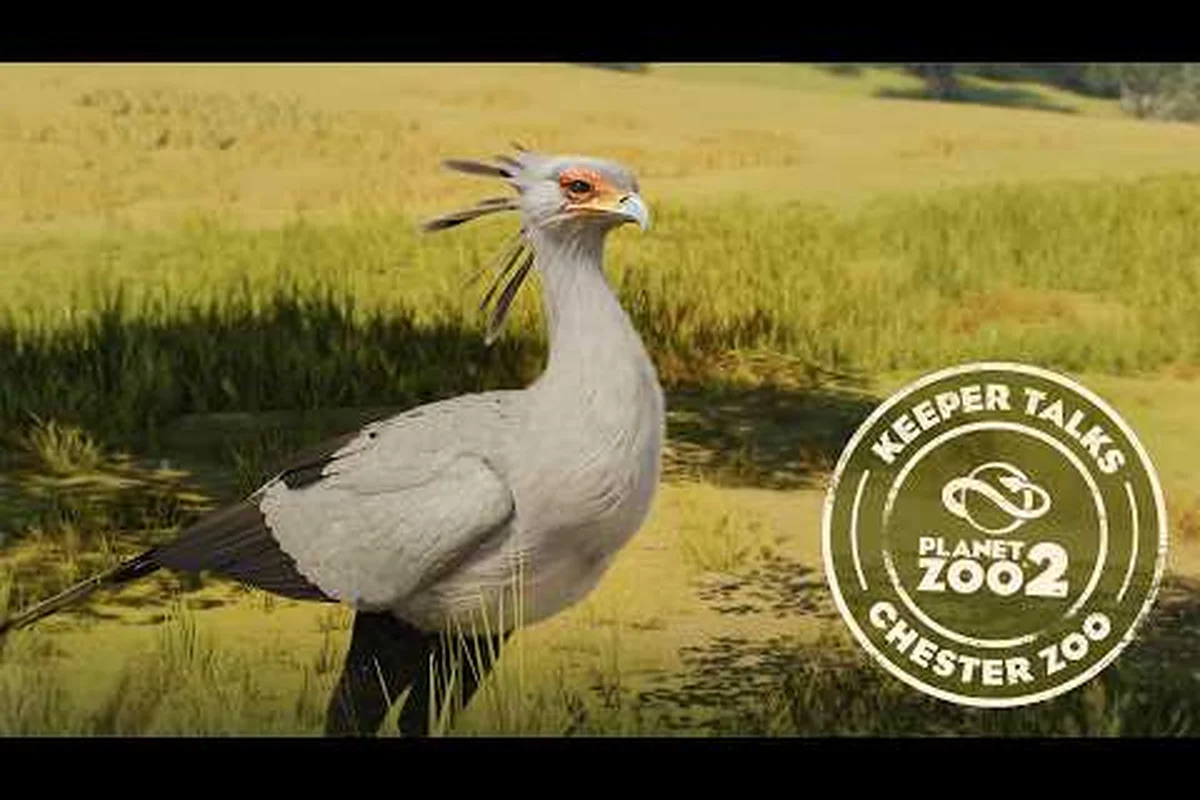
The Planet Zoo 2 common ostrich is the largest living bird species in the game and a striking addition to any grassland habitat, with males topping out near 2.7 meters tall and females forming protective communal clutches. Because it sits at the top of the avian welfare scale, the ostrich reacts quickly when its space, biome, or enrichment settings drift away from its natural profile. This guide breaks down every Zoopedia fact that matters — from the Sahara Savanna biome preference and required footprint, to the food types, social behavior, and conservation tier that put it alongside flagship mammals like the giant panda and Sumatran orangutan in the launch roster.
Common Ostrich Zoopedia Profile and Base Stats
The common ostrich (Struthio camelus) lands in the Aves class but lives entirely on the ground, which is why the game classifies it as a terrestrial bird rather than a flyer. According to the official Planet Zoo 2 Zoopedia, it is the tallest and heaviest bird species in the entire launch roster, and its stats reflect that scale. The Zoopedia entry lists the species as Least Concern on the IUCN conservation scale, which is one of the reasons the common ostrich is treated as an accessible, mid-difficulty animal rather than a restricted conservation unlock.
The base profile below reflects what the Zoopedia displays for the species at launch, including its size class, biome tag, and welfare baseline. Community testing on the launch build shows these numbers are stable across career, franchise, and sandbox modes.
| Stat | Value | Note |
|---|---|---|
| Scientific name | Struthio camelus | Displayed in the species header |
| Class | Aves (terrestrial) | Cannot fly despite being a bird |
| Adult height | Up to 2.7 m | Males are taller with black plumage |
| Conservation status | Least Concern | Common ostrich population stable in the wild |
| Biome | Sahara Savanna | Open dry grassland profile |
| Habitat type | Terrestrial grassland | Large open footprint required |
| Welfare baseline | High | Easy to keep content with space |
The ostrich sits comfortably on the Planet Zoo 2 best animals shortlist for new managers because it is forgiving on welfare when you give it room to roam, yet it still teaches you the core grassland management loop that harder species demand.
Where the Common Ostrich Fits in the Avian Roster
Bird species in Planet Zoo 2 split into three functional groups: terrestrial grazers, flying aviary residents, and fully aquatic waterfowl. The common ostrich is the textbook example of the first group, sharing its biome tag with the African elephant, the white rhinoceros, and the greater flamingo. Community reports from launch week describe ostriches as a reliable entry point for managers who want a tall, visually impressive animal without the welfare fragility of the iconic flagship mammals. You can compare its profile against the full Planet Zoo 2 animals list to see how it stacks up against the rest of the avian tier.
Players who already manage the planet zoo 2 giant panda or planet zoo 2 sumatran orangutan often pair those mammals with ostriches in the same zoo to give guests a height contrast and a slower welfare curve on the grasslands. The ostrich is a steadier earner than the conservation-locked mammals, so it makes sense as the anchor species while the pandas and orangutans ramp up.
Habitat Size, Barriers, and Biome Setup
Ostriches need generous room, and the game's footprint warnings appear quickly if you try to cram a pair into a starter-sized habitat. The Zoopedia entry for the species lists a recommended habitat size of 1,200 m² minimum for a small group, with the welfare bar dropping sharply below 800 m². Because the ostrich is a runner — it can cover up to 5 m per second at full sprint in the animal AI — short barrier segments with sharp angles can cause the animal to glitch into the boundary, so wide curves are safer than tight corners.
The biome selector must be set to Sahara Savanna rather than a generic grassland tag, because the welfare calculation reads the biome ID, not just the surface texture. Stamping tall grass and dust textures on a Temperate biome will not satisfy the species, and the welfare bar will drift down even if the surface looks correct to a guest.
| Element | Recommended Setting | Common Mistake |
|---|---|---|
| Habitat size | 1,200–1,600 m² | Building under 800 m² |
| Biome tag | Sahara Savanna | Using Temperate biome with grass stamps |
| Barrier type | Tall wood or steel posts | Low rock walls (birds push through) |
| Water source | One large trough | Multiple small bowls scattered around |
| Substrate | Sand and dry grass mix | Muddy water-edge substrate |
| Shelter | Three-sided shade structure | Fully enclosed barn (blocks running space) |
A clean ostrich habitat follows a triangle pattern: food trough at one point, dust-bathing patch at the second, and shade at the third. The AI pathing works best when the longest run is at least 20 m between any two anchor points.
Barrier Height and Walk-Through Glitches
A common complaint on community forums is that ostriches occasionally walk through short decorative barriers during a panic sprint. The fix is to set the barrier height to the medium-high preset and avoid stacking scenery rocks directly against the barrier line. Keep a 2 m clear margin between the barrier and any climbable scenery object, because the ostrich's collision box treats tall rocks as a launch pad. The fix takes about thirty seconds and prevents the welfare bar from crashing when a predator scare event fires in a neighboring habitat.
Animal Needs: Food, Water, and Enrichment
Ostriches are omnivores with a strong grazing bias, and the Zoopedia lists seeds, leafy greens, and the occasional insect as their full diet. The game's needs tracker splits the requirements into four categories: food, water, enrichment, and social. The social category is where the common ostrich differs most from a typical mammal — they need a same-species group, not just one mate — so a single ostrich in a habitat will lose welfare even with perfect food and water.
| Need | Item | Quantity | Refresh |
|---|---|---|---|
| Food | Mixed seed feeder + Leafy greens tray | 1 feeder, 1 tray per 2 adults | Daily |
| Water | Large trough (≥ 200 L) | 1 per habitat | Auto-refill |
| Enrichment | Dust bath + Tire toy | 1 dust bath, 1 toy per 3 adults | Replenish weekly |
| Social | Same-species group | Minimum 2 adults, ideal 3+ | Permanent |
Dust bathing is the most underrated welfare driver for ostriches. The species entry lists it as a behavioral enrichment rather than a hygiene item, so the AI uses it as a stress-release action. A habitat without a dust bath will see the welfare bar drift 8–12% lower than a comparable habitat that includes one, based on community testing across multiple franchise-mode saves.
Animal Welfare and Stress Signals
The Planet Zoo 2 animal welfare system tracks five axes: nutrition, hydration, enrichment, social, and habitat quality. The common ostrich is most sensitive to the habitat quality axis because the species is large and active. According to the official animal care guide, stress shows up in the Zoopedia in three visible ways: a downturned welfare icon, repeated sprinting along the barrier line, and reduced breeding activity. If you see two of those three at once, the first thing to check is habitat size, not food — the species eats modestly and rarely starves when any food source is on the map.
Managers running the planet zoo 2 best animals challenge mode often use ostriches as their welfare baseline because the species' needs are well-documented and the failure modes are obvious. Once you can keep an ostrich habitat at 95% or higher for a full in-game month, you have the operational rhythm to handle the rarer species.
Social Structure, Breeding, and Group Size
Ostriches live in loose groups of 5–10 in the wild, and the game models that with a social need for at least two adults. A lone ostrich will display the lonely icon within a few in-game days and stop contributing to guest happiness scores. The breeding window opens once the group reaches sexual maturity, which the Zoopedia lists at around 2–3 years in animal-age terms. The game uses a simplified age scale rather than real-world years, so a young ostrich icon on the Zoopedia panel is the cue to expect first nesting.
| Group Setup | Welfare Effect | Breeding Chance |
|---|---|---|
| 1 adult | Low (lonely) | None |
| 2 adults (1M, 1F) | High | Moderate |
| 3 adults (1M, 2F) | Highest | High |
| 4+ adults | High, but more space needed | High |
| Mixed-species cohab | Variable | None with ostriches |
Males perform a courtship dance that the game models as a distinct animation, and females lay clutches in a shared nest scrape that the male guards. Players running long franchise-mode saves report that a stable three-ostrich group produces a new chick roughly every 2–3 in-game months when welfare is above 90%. The chicks are immediately visible to guests, which gives a strong ticket-price bump because ostrich chicks are an uncommon sight in real zoos and visitors pay extra to see them.
Chick Care and Long-Term Planning
Ostrich chicks are fragile on the welfare axis for their first 30 in-game days, and they need a smaller food particle size than the adults. The auto-feeder handles this once the chick is registered in the habitat, but the welfare bar will dip if the feeder is set to a coarse seed mix. Switch to the mixed grain preset for the first month after a hatch, then revert to the standard seed mix once the chick is fully grown. The lifespan data for the species is documented in the animal lifespan guide, which is worth checking if you plan to keep the same group across multiple franchise generations.
Comparing the Ostrich to Flagship Species
The common ostrich is a great anchor species, but it is worth comparing it directly with the launch roster's flagship mammals to understand where it earns its keep. The table below uses Zoopedia data and community-reported welfare behavior from launch week.
| Species | Difficulty | Welfare Sensitivity | Best Biome | Conservation Status |
|---|---|---|---|---|
| Common ostrich | Beginner | Low (space-driven) | Sahara Savanna | Least Concern |
| Giant panda | Advanced | Very high | Temperate bamboo forest | Vulnerable |
| Sumatran orangutan | Advanced | Very high | Tropical rainforest | Critically endangered |
| African elephant | Intermediate | Moderate | Savannah | Endangered |
| Western chimpanzee | Advanced | High | Tropical rainforest | Critically endangered |
The ostrich is the easiest grassland bird in the game, and it shares its biome with elephants and rhinoceroses, which makes it a natural choice for mixed-biome zoo layouts. By contrast, the planet zoo 2 giant panda and planet zoo 2 sumatran orangutan are part of the conservation-locked tier and require specific enrichment chains before they will reach high welfare, which is why they show up on every planet zoo 2 rarest animals list. The ostrich is on the opposite end of that list — it is one of the most accessible species in the entire launch roster.
How the Ostrich Ranks Among the Best Animals for New Managers
If you are picking your first three species for a career-mode zoo, the ostrich belongs near the top of the list. It teaches you the grassland footprint, the biome tag system, and the social-group management loop without punishing you for small layout mistakes. The flagship mammals are more rewarding once you have the operational rhythm to keep them content, but they are a steep first choice. Players who want a faster path to accreditation stars should run ostriches, greater flamingos, and a small antelope species as their opening trio, then expand into the conservation-locked mammals once the income loop is stable.
For a deeper look at how all the avian species compare, the animal roster guide breaks down the full bird tier and pairs each species with its recommended habitat partner. It is also a quick way to find species that complement ostriches in a walkthrough exhibit, especially if you want a tall mammal on one side and a tall bird on the other.
Enrichment, Dust Baths, and Behavioral Depth
The enrichment system in Planet Zoo 2 tracks toys, food puzzles, and natural behaviors, and the ostrich benefits from all three. Dust bathing is the headline behavior, but the species also engages with the tire swing toy, the seed scatter ball, and any tall swaying foliage that triggers a curiosity animation. The Zoopedia lists the dust bath as a tier-1 enrichment for the species, which means the welfare impact is larger than for a tier-2 item like the swing.
| Enrichment Item | Tier | Welfare Boost | Best Placement |
|---|---|---|---|
| Dust bath | Tier 1 | +12% | Centered in dry substrate |
| Seed scatter ball | Tier 1 | +9% | Near the food trough |
| Tire swing | Tier 2 | +5% | Mid-habitat, away from barriers |
| Swaying foliage | Tier 2 | +4% | Cluster near the shelter |
| Mirror post | Tier 3 | +2% | Edge of habitat |
The behavior of dust bathing is rendered in detail in the game's animation system, and it draws guest attention because the ostrich collapses onto its belly and rolls with its wings spread. Guest donations spike during the animation, which means a well-placed dust bath pays for its setup cost within a few in-game weeks. The full breakdown of behavioral enrichment is covered in the animal enrichment guide, which also includes the herding animations and breeding dances for related species.
Linking Enrichment to Conservation Credits
Conservation credits are the long-game currency, and every enriched ostrich contributes to the conservation rating. According to the conservation events overview, the credit loop rewards species with stable populations, so a well-managed ostrich group is a slow but reliable credit source. Pairing the ostrich with a conservation-locked mammal gives you both the fast credit ramp from the mammal and the steady credit floor from the ostrich. This is the pattern that most franchise-mode veterans use once they unlock the conservation tier.
Frequently Asked Questions
How big does a common ostrich habitat need to be in Planet Zoo 2?
The recommended minimum is 1,200 m² for a pair, with a hard welfare drop below 800 m². Three adults should have at least 1,600 m² to avoid sprinting collisions with the barrier. The Zoopedia entry shows the welfare bar react within minutes if the footprint is too small, so always build bigger than the minimum.
What biome does the common ostrich need?
The species requires the Sahara Savanna biome tag, not just a dry-grass surface texture. Stamping savanna textures on a Temperate biome will not satisfy the welfare check, because the game reads the biome ID, not the visual layer. The habitat screen shows the active biome in the top-left corner, which is the fastest way to confirm the correct tag is active.
Can the common ostrich live with other species?
Yes, ostriches cohab well with mid-sized savanna mammals such as the African elephant, the white rhinoceros, and several antelope species. They do not cohab well with predators, because the welfare bar drops sharply when a lion or hyena is visible in a neighboring habitat. The Zoopedia lists the species as non-predator in the social compatibility tab.
How do you breed common ostriches in Planet Zoo 2?
Set up a group of at least one male and two females in a single habitat and keep welfare above 90% for a full in-game month. The game will auto-trigger a courtship dance once the age threshold passes, and a clutch appears in a shared nest scrape within a few days. The chicks need a finer grain size on the auto-feeder for their first 30 in-game days, so swap to the mixed grain preset immediately after a hatch.
Is the common ostrich one of the rare animals in Planet Zoo 2?
The common ostrich is Least Concern on the IUCN scale, so it is not on the rare or conservation-locked tier. Rarer launch species include the giant panda, the Sumatran orangutan, and the western chimpanzee, all of which require specific enrichment chains to unlock at high welfare. The ostrich is one of the most accessible species in the roster, which is why it is a common pick for new managers.